

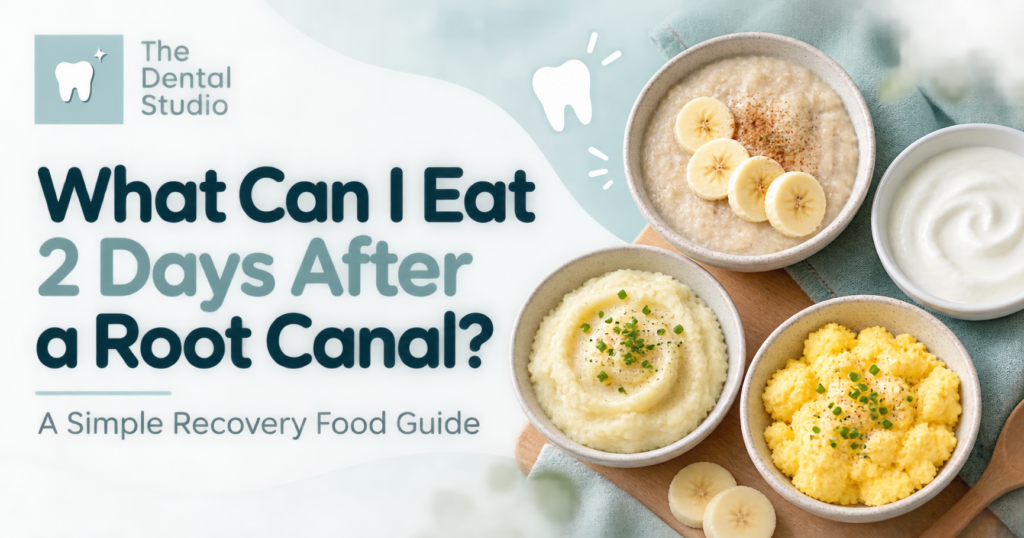
You’re not alone if it was two days ago that you had your root canal and you’re standing in front of your fridge wondering what is safe to eat. This is one of the most common questions we get from patients at The Dental Studio once the initial numbness wears off and real hunger sets in. The excellent news is that by day two most people can eat much more comfortably than they could on day one – you just need to know which foods will help your tooth heal and which ones will undo the dentist’s hard work.
This guide walks you through precisely what to eat on day two after a root canal, including popular Indian meal options like khichdi, idli, and curd and the foods you should continue to avoid; how to manage eating with a temporary filling or crown; and the warning signs that indicate you should call your dentist and not wait it out.
Why Day Two Still Needs Caution
Many patients believe that once the anesthesia wears off and the sharp pain subsides, their diet can return to normal. In fact, the tissue around the treated tooth is still healing. The tooth itself is often only protected by a temporary filling or a temporary crown. Biting something hard or sticky too soon, or chewing on it, can dislodge that temporary restoration or restart inflammation you had just begun to get under control.
So the question of what to eat after a root canal doesn’t cease to be important after the first 24 hours. Day two is really a continuation of day one – a little more flexibility but still firmly in “soft and gentle” territory.
Soft Foods That Work Well on Day Two
The swelling is usually down by now, and you can chew a little more than you could just after the procedure if you stay on the opposite side of your mouth from the treated tooth. Here’s what usually works well:
- Dal or lentil soup, well cooked and thinned with a little water
- Mashed potatoes or mashed sweet potatoes
- Omelet, soft or scrambled
- Yogurt or fruit smoothie
- Rice well cooked or rice porridge soft
- Ripe banana, mashed or sliced thin
- Paneer bhurji, cooked soft and mild
- Soups and broths, kept lukewarm rather than hot
- Oatmeal or dalia (broken wheat porridge), cooked until soft
- Soft, boiled vegetables like carrots, pumpkin, or bottle gourd
All of them have the common factor that they don’t require a lot of chewing, they aren’t acidic or spicy enough to irritate gum tissue, and they can be eaten warm, not scalding hot. If you are still not sure if something is “soft enough,” a simple test is if you could eat it with a spoon without applying much pressure with your jaw.
Indian Meal Ideas: Khichdi, Idli, Curd, and More
The Dental Studio’s majority of patients are looking for Indian household-friendly foods that are actually edible, so here are some practical combinations that are gentle on a healing tooth but still feel like a proper meal and not an invalid’s diet.
Khichdi is probably the best choice two days after a root canal. It is prepared with rice and moong dal, cooked soft with a little ghee, warm, simple to swallow, and mild enough not to irritate sensitive gums. Stay away from whole red chilies or mustard seeds that can pop between your teeth, and keep the spice level low.
Idli with a slightly spicy coconut chutney or sambar is another excellent choice. Steamed idlis are very soft and require very little chewing. If the sambar contains whole spices or is very sour, thin it out a little and strain out any hard bits.
Curd or plain dahi, eaten plain or mixed with rice as curd rice, is soothing to the mouth and easy to digest. It also has a cooling effect, which many patients find comforting if the area is still a little tender.
Include daliya porridge (savory or sweet), moong dal soup, soft dosa without the crisp edges, and suji halwa a tad runny in your day-two rotation as well. If you want something more filling, a soft roti dipped in dal or curry, torn into small pieces instead of bitten directly, is better than a whole paratha or naan at this stage.
The idea isn’t to eat blandly forever – it’s to get through the next few days without stressing the tooth so you can go back to your regular meals sooner rather than later.
Foods to Avoid While You’re Healing
Knowing what to eat after a root canal is just as important as knowing what to leave off your plate for now. Don’t:
- Hard foods: nuts, hard biscuits, raw carrots, or crusty bread
- Sticky foods like chikki, caramel, or chewing gum that can pull temporary filling
- Very hot food and drinks, including hot tea or hot soup, which can aggravate sensitivity
- Very cold items like ice cream straight from the freezer, if your tooth is temperature-sensitive
- Spicy or heavily seasoned food, which can irritate the healing gum tissue
- Acidic foods and drinks such as citrus fruits, tomato-based pickles, or carbonated soft drinks
- Chewy meats or anything that requires prolonged, forceful chewing
None of these are permanently off-limits – they’re just best set aside until your dentist confirms the tooth has healed enough to handle them again.
Eating With a Temporary Filling or Crown
Most patients who have a root canal leave the clinic with a temporary filling or a temporary crown on the treated tooth until the permanent restoration is ready. This is a temporary piece and not meant for heavy use, so a few precautions are important.
Chew as much as you can on the other side of your mouth. Stay away from sticky things, which can loosen the temporary cap. Avoid crunchy foods that might crack or dislodge it. If the temporary filling does fall out, don’t panic – just call The Dental Studio and we’ll sort it out quickly, ideally the same day, because an exposed tooth is more vulnerable to sensitivity and reinfection until it’s resealed.
When Can You Go Back to Normal Eating?
After the tenderness has passed and any temporary repair feels safe, most people can gradually return to firmer foods within a week. If you already have your permanent crown in place, your dentist will typically check once it’s fully set and bonded that you can chew normally on that tooth again. In the meantime, it is best to take it easy – soft foods for the first few days, semi-soft foods as you start to feel better, and only when you are comfortable and any restoration work is done should you resume your normal diet in full. The most common reason patients return to the dental chair with a loosened filling is rushing through this process.
Symptoms That Mean You Should Call Your Dentist
Mild soreness, tenderness while chewing, and slight sensitivity to temperature for a few days are all normal. However, you should call The Dental Studio if you notice:
- Pain that gets worse instead of better after the third day
- Swelling in your face, gums, or jaw
- A bad taste or discharge coming from the treated tooth
- Fever, or a feeling of general unwellness
- Your temporary filling or crown falling out
- Difficulty opening your mouth fully or swallowing
These can be signs of infection or a restoration issue, and catching them early makes treatment simpler.
Frequently Asked Questions
Can I eat rice two days after a root canal?
Yes, soft, well-cooked rice is generally fine, especially in the form of khichdi or curd rice. Avoid rice dishes that are very spicy or contain whole tough spices.
Is it okay to eat curd after a root canal?
Yes. Curd is soft, cooling, and easy to eat, making it one of the better options when you’re figuring out what to eat after a root canal in an Indian diet.
Can I chew on the treated tooth by day two?
It’s best to keep chewing on the opposite side for the first several days, even if the tooth feels better, since the treated area and any temporary filling are still settling.
How long do I need to stick to soft foods?
Most patients need soft foods for three to seven days, though the duration varies depending on how quickly your tooth heals and whether you have a temporary or permanent restoration in place.
What should I do if my temporary crown comes off while eating?
Keep the piece if you can find it, avoid chewing on that side, and call The Dental Studio right away so we can refit or replace it before the exposed tooth becomes sensitive or infected.
Can I eat spicy food two days after treatment?
It’s better to wait. Spice can irritate healing gum tissue and make any lingering soreness worse, so mild, home-style meals are the safer choice for now.
Conclusion
Two days post root canal, your job is simple: eat foods that are soft, mild, and easy on the treated tooth, be it a comforting bowl of khichdi, soft idli with chutney, or a bowl of curd rice. Avoid anything hard, sticky, very hot, freezing, or heavily spiced; chew on the opposite side if you still have a temporary filling or crown; and let your body’s healing dictate when you go back to your normal diet. If the pain increases, you develop swelling, or your temporary restoration becomes loose, don’t just wait it out – call The Dental Studio and we’ll help you get back to eating comfortably without jeopardizing your treatment.
For more information about root canal recovery and aftercare, please contact our team at The Dental Studio.